Introduction
Cloud computing has become one of the most important technologies shaping the modern digital world. Over the past decade, it has changed the way individuals, businesses, and organizations store data, run applications, and access computing resources. Instead of relying on traditional physical servers and local systems, cloud computing allows users to access powerful technology services through the internet.
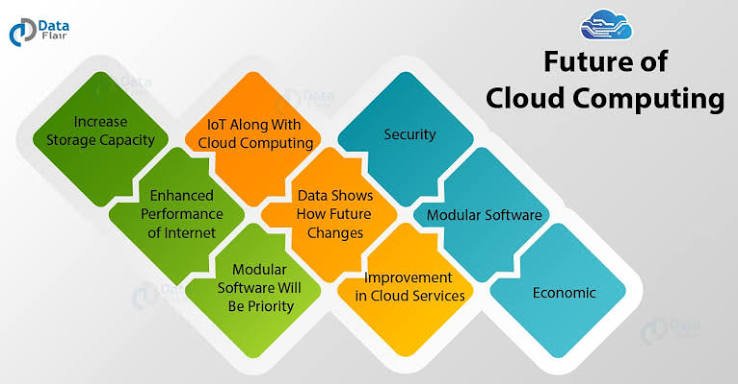
As digital transformation continues to accelerate, the future of cloud computing is expected to bring even greater changes. Emerging technologies such as artificial intelligence, edge computing, quantum computing, and automation are expanding the capabilities of cloud platforms. Organizations are increasingly adopting cloud solutions to improve efficiency, reduce costs, and develop innovative services. The future of cloud computing will not only focus on storing information but also on creating intelligent, secure, and highly connected digital environments.
The Evolution of Cloud Computing
Cloud computing has developed significantly since its early introduction. Initially, businesses used cloud services mainly for data storage and basic software applications. Today, cloud platforms provide advanced services such as artificial intelligence tools, machine learning models, data analytics, cybersecurity solutions, and application development environments.
Major cloud providers have invested heavily in improving performance, security, and reliability. These developments have allowed organizations of all sizes, from small startups to global enterprises, to use advanced technologies without requiring large investments in physical infrastructure.
In the future, cloud computing will continue to evolve from a simple service model into a complete digital ecosystem that supports innovation and intelligent decision-making.
Artificial Intelligence and Machine Learning in Cloud Computing
One of the biggest trends shaping the future of cloud computing is the integration of artificial intelligence (AI) and machine learning (ML). Cloud platforms provide the massive computing power and storage capacity required to develop and operate AI systems.
Businesses are using cloud-based AI solutions for tasks such as customer analysis, automation, fraud detection, and personalized recommendations. For example, companies can analyze large amounts of data through cloud platforms to understand customer behavior and make better decisions.
In the future, AI-powered cloud systems are expected to become more advanced. Automated cloud management, intelligent security monitoring, and self-optimizing systems will help organizations manage their technology environments more efficiently. AI will also make cloud services easier to use by allowing users to interact with systems through natural language and automated tools.
Growth of Edge Computing
Edge computing is another important innovation connected to the future of cloud technology. Traditional cloud computing processes data in centralized data centers, which can sometimes create delays when information must travel long distances. Edge computing solves this problem by processing data closer to where it is created.
This technology is especially useful for applications that require fast responses, such as autonomous vehicles, smart cities, industrial automation, and Internet of Things (IoT) devices.
The future will likely involve a combination of cloud and edge computing. Cloud platforms will handle large-scale processing and storage, while edge devices will manage real-time operations. This combination will create faster, more efficient, and more reliable digital systems.
The Rise of Serverless Computing
Serverless computing is changing the way developers create and manage applications. In traditional systems, developers need to manage servers, operating systems, and infrastructure. Serverless technology removes much of this responsibility by allowing developers to focus only on writing code.
With serverless computing, organizations pay only for the computing resources they use. This makes application development faster and more cost-effective.
In the future, serverless computing is expected to become more popular as businesses look for flexible solutions that reduce complexity. Developers will be able to build and launch applications quickly without worrying about infrastructure management.
Increased Focus on Cloud Security
As more organizations move their data and operations to the cloud, cybersecurity will become a major priority. The increasing amount of sensitive information stored online creates new challenges related to data protection, privacy, and cyber threats.
Future cloud systems will include more advanced security technologies, such as artificial intelligence-based threat detection, stronger encryption methods, and automated security responses. Cloud providers will continue improving their security systems to protect users from cyberattacks.
Organizations will also focus more on adopting security strategies such as zero-trust architecture, where every user and device must be verified before accessing resources. Strong security practices will be essential for building trust in cloud computing.
Hybrid and Multi-Cloud Strategies
Many organizations are moving toward hybrid and multi-cloud approaches. A hybrid cloud combines private and public cloud environments, while a multi-cloud strategy uses services from multiple cloud providers.
These approaches allow organizations to choose the best environment for different tasks. For example, sensitive information can be stored in private cloud systems, while public cloud platforms can be used for large-scale applications.
In the future, hybrid and multi-cloud strategies will become more common because they provide flexibility, better performance, and reduced dependence on a single provider.
Cloud Computing and the Internet of Things (IoT)
The Internet of Things is expanding rapidly, with billions of connected devices generating large amounts of data. Cloud computing provides the storage, processing power, and management tools needed to support these devices.
Smart homes, wearable devices, healthcare equipment, and industrial machines all depend on cloud technology to collect and analyze information.
In the future, cloud computing and IoT will become even more connected. Smart systems will be able to analyze data in real time, make decisions automatically, and provide more personalized experiences for users.
Quantum Computing and the Cloud
Quantum computing is an emerging technology that has the potential to transform cloud computing in the future. Quantum computers use advanced methods of processing information that could solve certain complex problems much faster than traditional computers.
Although quantum computing is still developing, cloud-based access to quantum technology is already being explored. Instead of purchasing expensive quantum computers, organizations may be able to access quantum computing services through cloud platforms.
In the future, the combination of cloud computing and quantum technology could support major breakthroughs in areas such as medicine, scientific research, cybersecurity, and advanced simulations.
Sustainable Cloud Computing
Environmental sustainability is becoming increasingly important in technology. Data centers require large amounts of electricity, which has raised concerns about energy consumption and environmental impact.
Future cloud computing will focus more on sustainability through renewable energy sources, energy-efficient hardware, and improved data center designs. Cloud providers are investing in technologies that reduce carbon emissions and improve resource efficiency.
Green cloud computing will become an important factor as organizations seek environmentally responsible technology solutions.
The Impact of Cloud Computing on Businesses
The future of cloud computing will continue to transform businesses by creating new opportunities for innovation. Companies will be able to develop products faster, analyze data more effectively, and provide better services to customers.
Small businesses will benefit from access to advanced technologies that were previously available only to large organizations. Cloud platforms will allow startups to compete globally without requiring expensive infrastructure.
Furthermore, remote work and digital collaboration will continue to depend heavily on cloud technologies, making businesses more flexible and adaptable.
Challenges in the Future of Cloud Computing
Despite its many advantages, cloud computing will continue to face challenges. Data privacy, cybersecurity risks, regulatory requirements, and dependency on internet connectivity will remain important concerns.
Organizations will need to carefully manage their cloud strategies and ensure that they follow security and compliance standards. Cloud providers will also need to continue improving reliability and transparency to maintain user confidence.

Conclusion
The future of cloud computing is filled with exciting possibilities and innovations. Technologies such as artificial intelligence, edge computing, serverless systems, IoT, and quantum computing will continue to expand the capabilities of cloud platforms.
Cloud computing will become more intelligent, secure, and efficient, helping organizations solve complex problems and create new opportunities. As businesses and individuals become increasingly dependent on digital services, cloud technology will remain a key foundation of the modern digital world.
The future of cloud computing is not just about storing data or running applications; it is about building smarter, faster, and more connected systems that will shape the way people live and work in the years ahead.