Introduction
Cloud computing has become a major foundation of modern technology, changing how individuals and organizations use computing resources. Instead of depending on traditional physical servers and locally installed software, cloud computing allows users to access storage, applications, databases, and processing power through the internet. This approach provides greater flexibility, scalability, and cost efficiency, making it an essential technology for businesses, governments, educational institutions, and individuals.
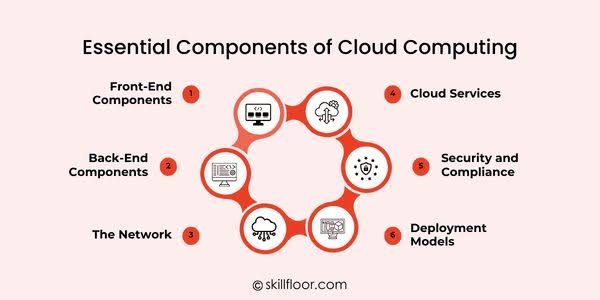
Behind every cloud service is a carefully designed structure known as cloud computing architecture. Cloud architecture defines how different components work together to deliver reliable and efficient cloud services. It includes various elements such as front-end platforms, back-end systems, cloud infrastructure, networks, security mechanisms, and service management tools. Understanding these core components helps explain how cloud systems operate and why they have become so widely adopted.
What is Cloud Computing Architecture?
Cloud computing architecture refers to the framework that combines different technologies, components, and services to create a functional cloud environment. It describes the relationship between users, applications, data storage systems, servers, and networks that work together to provide cloud-based services.
A cloud architecture is designed to ensure that resources are available whenever needed while maintaining performance, security, and reliability. It allows cloud providers to deliver services to millions of users by using distributed computing systems and advanced management techniques.
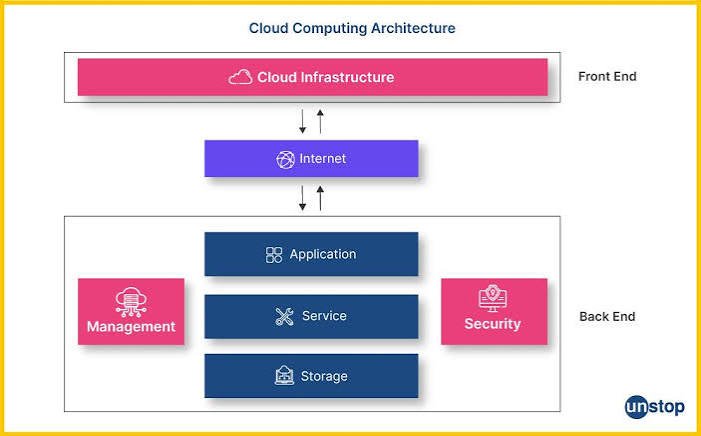
Cloud computing architecture is generally divided into two main parts:
- Front-End Architecture
- Back-End Architecture
These two parts communicate through the internet and work together to provide users with cloud services.
Front-End Architecture
The front-end is the part of cloud architecture that users interact with directly. It includes the user interface, applications, and devices that allow users to access cloud services.
User Interface
The user interface is the visible part of cloud computing that enables users to interact with cloud applications. It can include websites, mobile applications, dashboards, and software interfaces.
For example, when a user accesses an online storage service through a web browser, the website interface represents the front-end component. A simple and user-friendly interface allows users to manage files, applications, and services easily.
Client Devices
Client devices are the devices used to access cloud services. These may include:
- Desktop computers
- Laptops
- Smartphones
- Tablets
- Internet-connected devices
These devices connect to cloud platforms through internet connections and allow users to access applications and information from different locations.
Applications
Applications are software programs that users access through the cloud. These applications may include business software, communication tools, educational platforms, and entertainment services. Cloud applications eliminate the need for users to install and maintain software on their own devices.
Back-End Architecture
The back-end is the foundation of cloud computing. It includes the infrastructure, servers, storage systems, and management tools responsible for delivering cloud services.
Cloud Servers
Cloud servers are powerful computers that provide processing capabilities for cloud applications. Instead of using a single physical server, cloud providers use networks of servers located in different data centers.
These servers handle user requests, run applications, process data, and ensure that services remain available even if one server experiences problems.
Data Storage
Storage is one of the most important components of cloud architecture. Cloud storage systems allow users and organizations to save large amounts of data without requiring physical storage devices.
Cloud storage provides:
- Easy access to data
- Automatic backups
- Data recovery options
- Scalable storage capacity
Organizations use cloud storage for documents, databases, applications, and large amounts of business information.
Virtualization Technology
Virtualization is a key technology behind cloud computing. It allows one physical server to operate as multiple virtual machines. Each virtual machine can run its own operating system and applications while sharing the same physical hardware.
Virtualization improves resource utilization, reduces costs, and allows cloud providers to quickly create and manage computing environments.
Networking Infrastructure
Networking is essential for connecting users with cloud resources. Cloud networks include routers, switches, communication systems, and internet connections that allow data to move between users and cloud servers.
A strong network infrastructure ensures fast communication, low delays, and reliable access to cloud services.
Cloud Service Management
Cloud service management involves monitoring, controlling, and maintaining cloud resources. It ensures that cloud services operate efficiently and meet user requirements.
Important management functions include:
Resource Management
Cloud providers must manage computing resources effectively to provide services to many users. Resource management involves assigning servers, storage, and network capacity according to user demand.
Monitoring and Performance Management
Cloud systems continuously monitor performance, availability, and security. Monitoring tools help identify problems and maintain reliable services.
Automation
Automation reduces manual work by allowing cloud systems to automatically perform tasks such as software updates, resource allocation, and system maintenance.
Automation improves efficiency and helps organizations manage complex cloud environments.
Database Management Systems
Databases are essential components of cloud architecture because they store and organize information. Cloud databases allow applications to access and process data efficiently.
Cloud databases provide advantages such as:
- High availability
- Automatic scaling
- Data security
- Easy management
Businesses use cloud databases for customer information, financial records, online transactions, and analytics.
Security Components in Cloud Architecture
Security is one of the most important aspects of cloud computing architecture. Since cloud systems store large amounts of sensitive information, strong security measures are required.
Identity and Access Management
Identity and Access Management (IAM) controls who can access cloud resources. It ensures that only authorized users can view or modify information.
Data Encryption
Encryption protects data by converting it into a secure format that cannot be easily accessed by unauthorized users. Cloud providers use encryption to protect data during storage and transmission.
Security Monitoring
Cloud security systems continuously monitor activities to detect suspicious behavior, cyber threats, and unauthorized access attempts.
Types of Cloud Architecture
Cloud architectures can be designed in different ways depending on organizational needs.
Public Cloud Architecture
Public cloud architecture provides services through cloud providers that share resources among multiple users. It is cost-effective and commonly used by businesses and individuals.
Private Cloud Architecture
Private cloud architecture is designed for a single organization. It provides greater control, customization, and security, making it suitable for organizations with strict data requirements.
Hybrid Cloud Architecture
Hybrid cloud architecture combines public and private cloud environments. It allows organizations to maintain sensitive operations privately while using public cloud resources for flexibility and scalability.
Benefits of Well-Designed Cloud Architecture
A strong cloud architecture provides several advantages:
Scalability
Cloud architecture allows organizations to increase or decrease resources according to demand. This flexibility helps businesses handle changing workloads efficiently.
Reliability
Cloud systems use multiple servers and backup systems to maintain service availability. If one component fails, another system can continue operations.
Cost Efficiency
Cloud architecture reduces the need for expensive hardware and maintenance. Organizations can pay for the resources they actually use.
Improved Performance
Efficient cloud architecture ensures faster processing, better user experiences, and reliable application performance.
Future of Cloud Computing Architecture
Cloud architecture will continue to evolve as new technologies emerge. Artificial intelligence, edge computing, automation, and advanced security solutions will improve cloud systems in the future.
Future cloud architectures will become more intelligent and self-managing. They will automatically optimize resources, detect security threats, and provide personalized services. The integration of cloud computing with emerging technologies will create faster, smarter, and more efficient digital environments.
Conclusion
Cloud computing architecture is the foundation that allows cloud services to operate effectively. It combines front-end interfaces, back-end infrastructure, storage systems, networking, security tools, and management services to provide reliable computing solutions.
Understanding the core components of cloud architecture helps explain how modern cloud platforms deliver powerful services to users around the world. As technology continues to advance, cloud architecture will play an increasingly important role in supporting digital transformation and creating innovative solutions for businesses and society.