Introduction
Cloud computing has become one of the most important technologies in the modern digital world. It has changed the way individuals, businesses, and organizations access, store, and manage information. Instead of depending on traditional physical servers and local computer systems, cloud computing allows users to access computing resources such as storage, applications, databases, and processing power through the internet.
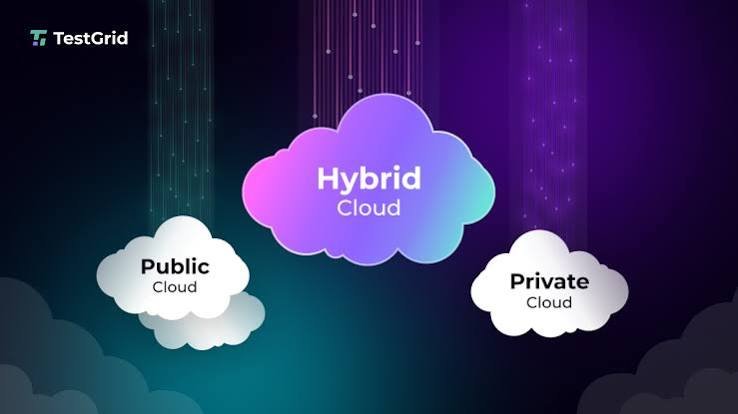
One of the key features of cloud computing is its flexibility. Different organizations have different requirements based on their size, security needs, budget, and operational goals. To meet these different needs, cloud computing is divided into several types based on how services are deployed. The three main types are public cloud, private cloud, and hybrid cloud.
Each type of cloud computing has its own characteristics, advantages, and limitations. Understanding these cloud models helps organizations choose the right solution for their specific requirements.
Understanding Cloud Computing Deployment Models
Cloud deployment models define how cloud services are hosted, managed, and accessed. They determine who owns the infrastructure, who can use the resources, and how data is stored and controlled.
The three primary cloud deployment models are:
- Public Cloud
- Private Cloud
- Hybrid Cloud
These models provide different levels of flexibility, control, security, and cost efficiency. Organizations select a cloud model based on factors such as data sensitivity, performance requirements, and business objectives.
Public Cloud
What is Public Cloud?
A public cloud is a cloud computing model where services are provided by third-party cloud providers and shared among multiple users or organizations. The cloud infrastructure is owned and managed by the service provider, while customers access resources through the internet.
In a public cloud environment, users do not need to purchase or maintain physical servers. Instead, they can use computing resources whenever needed and pay according to their usage.
Examples of public cloud services include online storage, web hosting, software applications, and development platforms.
Features of Public Cloud
Public clouds have several important characteristics:
Shared Infrastructure
Public cloud providers use large data centers where resources are shared among many customers. Although resources are shared, each user’s data remains separate and protected.
Cost Efficiency
Public clouds reduce costs because organizations do not need to invest in expensive hardware, maintenance, or infrastructure management.
Scalability
Public cloud services allow users to increase or decrease resources quickly according to their needs. This makes them suitable for businesses with changing workloads.
Easy Accessibility
Users can access public cloud services from anywhere with an internet connection, making them convenient for remote work and global operations.
Advantages of Public Cloud
Public cloud computing provides many benefits:
Lower Costs
Businesses can avoid large investments in servers and equipment. They only pay for the resources they use.
Simple Management
Cloud providers handle system maintenance, updates, and hardware management, reducing the workload on internal IT teams.
Fast Deployment
Organizations can quickly launch applications and services without waiting for physical infrastructure setup.
Global Availability
Public cloud providers operate data centers around the world, allowing businesses to deliver services internationally.
Limitations of Public Cloud
Despite its benefits, public cloud computing has some challenges:
- Less control over infrastructure compared to private clouds
- Possible concerns about data privacy
- Dependence on internet connectivity
- Limited customization options for specific business requirements
Common Uses of Public Cloud
Public clouds are commonly used for:
- Website hosting
- Online applications
- Data storage
- Software services
- Development and testing environments
- Backup solutions
Small businesses and startups often prefer public cloud services because they provide affordable access to advanced technology.
Private Cloud
What is Private Cloud?
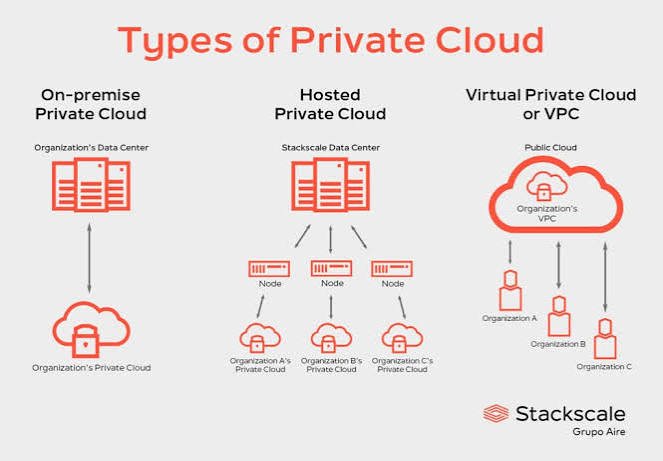
A private cloud is a cloud computing model designed for a single organization. Unlike public clouds, private cloud infrastructure is not shared with other users. It can be hosted within the organization’s own data center or managed by an external cloud provider.
Private clouds provide greater control, customization, and security, making them suitable for organizations that handle sensitive information.
Features of Private Cloud
Dedicated Resources
Private clouds provide exclusive computing resources for one organization. This improves performance and allows better control over infrastructure.
Enhanced Security
Since resources are not shared with other users, private clouds provide stronger security and privacy protection.
Customization
Organizations can customize private cloud environments according to their specific requirements, policies, and operational needs.
Greater Control
Businesses have more control over system configuration, security settings, and data management.
Advantages of Private Cloud
Improved Data Security
Private clouds are suitable for organizations that manage sensitive information, such as financial institutions, healthcare organizations, and government agencies.
Better Compliance
Many industries have strict regulations regarding data storage and privacy. Private clouds help organizations meet these requirements.
High Performance
Dedicated resources often provide better performance and reliability for critical applications.
Custom Solutions
Organizations can design private clouds according to their unique business needs.
Limitations of Private Cloud
Private clouds also have some disadvantages:
- Higher setup and maintenance costs
- Requires skilled IT professionals
- More responsibility for managing infrastructure
- Less flexibility compared to public clouds
Common Uses of Private Cloud
Private clouds are commonly used by:
- Banks and financial organizations
- Healthcare providers
- Government departments
- Large enterprises
- Research organizations
Organizations that require strict security and control often choose private cloud solutions.
Hybrid Cloud
What is Hybrid Cloud?
A hybrid cloud combines both public and private cloud environments. It allows organizations to use private cloud infrastructure for sensitive operations while using public cloud resources for general applications and services.
The main purpose of hybrid cloud computing is to provide a balance between security, flexibility, and cost efficiency.
For example, a company may store confidential customer information in a private cloud while using a public cloud for website hosting and data processing.
Features of Hybrid Cloud
Combination of Cloud Models
Hybrid cloud integrates private and public cloud environments into a connected system.
Flexible Resource Management
Organizations can choose where to store data and run applications based on their needs.
Improved Scalability
Businesses can use public cloud resources during periods of high demand while maintaining important operations in private cloud systems.
Better Cost Control
Hybrid cloud allows organizations to save costs by using public cloud services where high security is not required.
Advantages of Hybrid Cloud
Balance Between Security and Flexibility
Hybrid cloud provides the security of private clouds and the scalability of public clouds.
Efficient Resource Usage
Organizations can manage resources more effectively by choosing the most suitable cloud environment for each task.
Business Continuity
Hybrid cloud solutions support backup and disaster recovery strategies by distributing resources across multiple environments.
Supports Digital Transformation
Hybrid cloud allows businesses to adopt new technologies while maintaining control over critical systems.
Limitations of Hybrid Cloud
Some challenges include:
- Complex management
- Higher integration requirements
- Need for skilled IT professionals
- Security challenges when connecting multiple environments
Common Uses of Hybrid Cloud
Hybrid clouds are commonly used for:
- Large business applications
- Data backup and recovery
- E-commerce platforms
- Financial services
- Healthcare systems
- Organizations with changing workloads
Comparison Between Public, Private, and Hybrid Clouds
| Feature | Public Cloud | Private Cloud | Hybrid Cloud |
|---|---|---|---|
| Ownership | Third-party provider | Single organization | Combination of both |
| Cost | Low | High | Medium |
| Security | Good | Very high | High |
| Control | Limited | Full control | Flexible control |
| Scalability | Excellent | Limited | Excellent |
| Management | Managed by provider | Managed by organization | Shared management |
Choosing the Right Cloud Model
Selecting the right cloud model depends on an organization’s goals and requirements.
Organizations should consider:
- Type of data being stored
- Security requirements
- Budget limitations
- Performance needs
- Business growth plans
- Compliance requirements
Small businesses may prefer public clouds because they are affordable and easy to manage. Large organizations dealing with sensitive information may choose private or hybrid clouds for greater control and security.
Future of Cloud Deployment Models
The future of cloud computing will involve more advanced and flexible cloud solutions. Businesses are increasingly adopting hybrid and multi-cloud strategies to combine the benefits of different cloud environments.
Technologies such as artificial intelligence, automation, and edge computing will further improve cloud performance and security. Cloud models will continue to evolve to meet the changing needs of organizations in a digital world.
Conclusion
Public, private, and hybrid clouds represent the three major types of cloud computing deployment models. Each model provides unique advantages depending on an organization’s needs.
Public clouds offer affordability and scalability, private clouds provide security and control, while hybrid clouds combine the strengths of both approaches. By understanding these cloud models, organizations can make better decisions about how to use cloud technology effectively.
As businesses continue their digital transformation journey, cloud computing will remain a powerful tool for improving efficiency, innovation, and competitiveness in the modern world.