Introduction
Technology has become the backbone of modern organizations, helping businesses manage operations, communicate with customers, store information, and deliver digital services. For many years, companies relied on traditional IT infrastructure, which required physical servers, data centers, software installations, and dedicated IT teams. However, the rapid growth of cloud computing has introduced a new way of managing technology resources.
Cloud computing allows organizations to access computing services through the internet instead of owning and maintaining all hardware and software themselves. This change has transformed the way businesses approach IT management, offering greater flexibility, scalability, and cost efficiency.
Traditional IT infrastructure still plays an important role in many organizations, especially those that require complete control over their systems. However, cloud computing has become increasingly popular because it supports faster innovation and digital transformation.
This article provides a complete comparison between cloud computing and traditional IT infrastructure by examining their differences, advantages, disadvantages, costs, security, scalability, and suitability for modern businesses.
Understanding Traditional IT Infrastructure
What is Traditional IT Infrastructure?
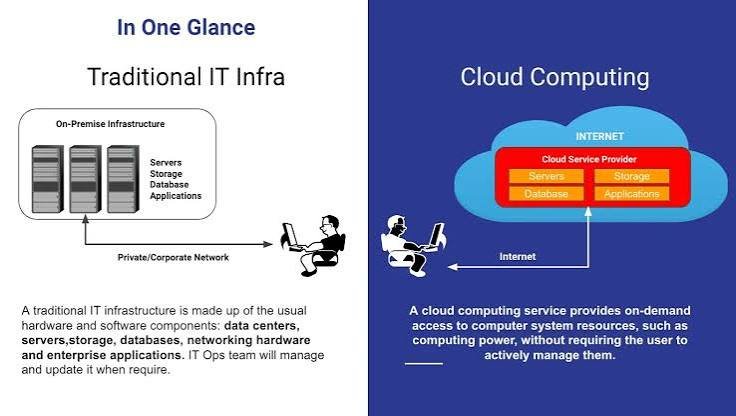
Traditional IT infrastructure refers to the conventional approach where organizations own, manage, and maintain their own computing resources. These resources usually include physical servers, storage devices, networking equipment, software systems, and data centers.
In a traditional IT environment, businesses are responsible for purchasing hardware, installing software, maintaining systems, managing security, and handling technical issues.
For example, a company may build its own server room with physical computers and storage systems to run its business applications and store important data.
Components of Traditional IT Infrastructure
Traditional IT infrastructure typically includes:
- Physical servers
- Data storage systems
- Networking equipment
- Operating systems
- Business applications
- Security tools
- IT support teams
Organizations must manage all these components internally to ensure reliable operations.
Understanding Cloud Computing
What is Cloud Computing?
Cloud computing is a technology that provides computing resources through the internet. Instead of owning physical infrastructure, organizations can access services provided by cloud companies.
Cloud providers manage servers, storage systems, networking, and maintenance, while users access resources based on their requirements.
Cloud computing services include:
- Infrastructure as a Service (IaaS)
- Platform as a Service (PaaS)
- Software as a Service (SaaS)
These services allow organizations to use advanced technology without investing heavily in physical infrastructure.
Cloud Computing vs Traditional IT Infrastructure: Key Differences
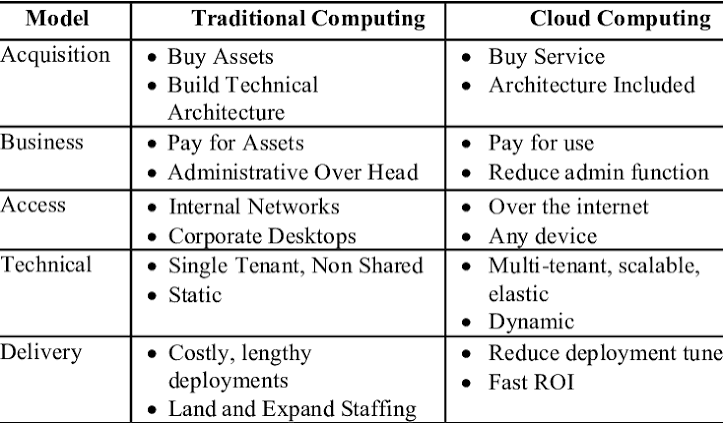
1. Ownership and Management
Traditional IT Infrastructure
In traditional IT systems, organizations own all hardware and software resources. They are responsible for purchasing equipment, managing servers, performing updates, and solving technical problems.
This provides complete control but also requires significant time, money, and technical expertise.
Cloud Computing
In cloud computing, infrastructure is owned and managed by cloud service providers. Organizations access resources through the internet and do not need to maintain physical hardware.
This reduces management responsibilities and allows companies to focus on their core business activities.
2. Cost Comparison
Traditional IT Infrastructure Costs
Traditional IT requires large initial investments, including:
- Server purchases
- Data center construction
- Hardware maintenance
- Software licenses
- Electricity and cooling expenses
- IT staff salaries
These costs can be challenging, especially for small and medium-sized businesses.
Cloud Computing Costs
Cloud computing follows a flexible payment model. Organizations usually pay only for the resources they use.
Benefits include:
- Lower upfront costs
- Reduced maintenance expenses
- Flexible pricing options
- Better budget control
Cloud computing converts large capital expenses into manageable operational expenses.
3. Scalability and Flexibility
Traditional IT Infrastructure
Scaling traditional infrastructure can be slow and expensive. If a business needs more storage or computing power, it must purchase and install additional hardware.
This process may take weeks or months.
Cloud Computing
Cloud platforms provide rapid scalability. Businesses can increase or decrease resources within minutes according to demand.
This makes cloud computing ideal for companies experiencing growth or changing workloads.
4. Performance and Reliability
Traditional IT Infrastructure
Traditional systems can provide reliable performance when properly maintained. However, hardware failures may cause downtime, and organizations are responsible for solving technical issues.
Cloud Computing
Cloud providers use advanced data centers with backup systems and multiple servers to maintain high availability.
Cloud platforms often provide:
- Automatic backups
- Disaster recovery options
- Load balancing
- System monitoring
These features improve reliability and reduce downtime.
5. Security Comparison
Traditional IT Security
Traditional IT infrastructure allows organizations to maintain complete control over security systems. Businesses can create customized security policies according to their requirements.
However, maintaining strong security requires skilled professionals and continuous investment.
Cloud Security
Cloud providers invest heavily in cybersecurity technologies, including:
- Encryption
- Identity management
- Threat detection
- Security monitoring
- Access controls
Although cloud providers offer strong protection, organizations must still manage user access and data security properly.
6. Accessibility and Remote Work
Traditional IT Infrastructure
Traditional systems often depend on physical locations. Employees may need to be connected to company networks to access business resources.
This can limit remote work opportunities.
Cloud Computing
Cloud systems allow users to access applications and data from anywhere with an internet connection.
This supports:
- Remote work
- Global teams
- Online collaboration
- Flexible business operations
7. Maintenance and Updates
Traditional IT Infrastructure
Organizations are responsible for maintaining hardware, installing updates, and managing technical problems.
This requires dedicated IT teams and regular maintenance efforts.
Cloud Computing
Cloud providers handle most infrastructure maintenance, including hardware upgrades and system improvements.
This reduces the workload for internal IT departments.
8. Data Storage and Backup
Traditional IT Infrastructure
Organizations must purchase and manage their own storage systems. Creating backups and disaster recovery plans requires additional resources.
Cloud Computing
Cloud platforms provide scalable storage solutions with automatic backup options.
Businesses can store large amounts of data without purchasing additional physical storage equipment.
Advantages of Cloud Computing
Cloud computing provides several important benefits:
Lower Costs
Organizations reduce hardware expenses and maintenance costs by using cloud services.
Faster Innovation
Businesses can quickly develop and launch new applications using cloud platforms.
Better Collaboration
Cloud tools improve communication and teamwork among employees.
Global Access
Organizations can provide services to customers worldwide without building physical infrastructure everywhere.
Improved Disaster Recovery
Cloud backup systems help businesses recover quickly from unexpected failures.
Advantages of Traditional IT Infrastructure
Although cloud computing is growing rapidly, traditional IT infrastructure still offers benefits.
Complete Control
Organizations have full control over hardware, software, and security systems.
Customization
Businesses can design systems according to their specific technical requirements.
Data Control
Some organizations prefer keeping sensitive information on their own physical systems.
No Internet Dependency
Traditional systems can continue working internally even when internet access is unavailable.
Disadvantages of Cloud Computing
Cloud computing also has some limitations:
- Dependence on internet connectivity
- Security and privacy concerns
- Possible vendor dependency
- Less control over physical infrastructure
Disadvantages of Traditional IT Infrastructure
Traditional IT infrastructure faces several challenges:
- High initial costs
- Limited scalability
- Expensive maintenance
- Requires technical expertise
- Slower technology updates
Which One is Better for Businesses?
The choice between cloud computing and traditional IT infrastructure depends on an organization’s goals, budget, and requirements.
Cloud computing is often better for businesses that need:
- Flexibility
- Scalability
- Remote access
- Lower costs
- Faster innovation
Traditional IT infrastructure may be suitable for organizations that require:
- Complete control
- Highly customized systems
- Specific security requirements
- Local data management
Many modern businesses are choosing hybrid approaches that combine traditional infrastructure with cloud services to achieve the best balance between control and flexibility.
Future of IT Infrastructure
The future of IT infrastructure will likely involve a combination of cloud computing, artificial intelligence, automation, and edge computing. Businesses are increasingly moving toward flexible technology environments that allow them to adapt quickly to changing demands.
Cloud computing will continue to grow because it supports digital transformation and provides access to advanced technologies. However, traditional IT infrastructure will continue to exist in industries where complete control and customization are important.
Conclusion
Cloud computing and traditional IT infrastructure both have their own advantages and challenges. Traditional IT provides greater control and customization but requires significant investment and maintenance. Cloud computing offers flexibility, scalability, cost savings, and easy access to advanced technologies.
For many organizations, cloud computing has become the preferred solution because it supports modern business needs and digital transformation. However, the best approach depends on each organization’s specific requirements.
As technology continues to evolve, businesses will increasingly adopt flexible IT strategies that combine the strengths of both cloud computing and traditional infrastructure to achieve efficiency, security, and long-term growth.