
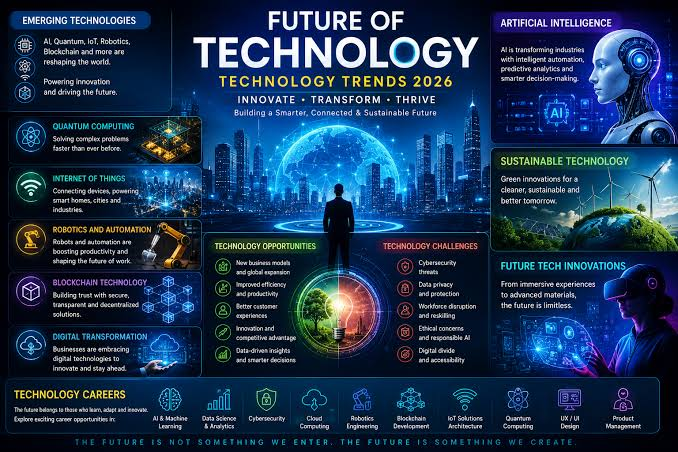
Technology has become one of the most powerful forces shaping the modern world. From smartphones and artificial intelligence to renewable energy and advanced healthcare, technological progress is changing the way people live, work, communicate, and solve problems.
But technology alone does not create a better future. Innovation is what turns technology into meaningful solutions.
Technology and innovation work together to address challenges, improve everyday life, create new opportunities, and help societies become more efficient and sustainable. Whether it is a small business adopting digital tools or scientists developing cleaner energy solutions, innovation continues to influence almost every part of our lives.
In a rapidly changing world, understanding the relationship between technology and innovation is essential for individuals, businesses, and communities that want to prepare for the future.
What Is Technology and Innovation?
Technology refers to the tools, systems, machines, and processes people create to solve problems or perform tasks more effectively. It can range from simple tools to highly advanced systems such as artificial intelligence, robotics, cloud computing, and biotechnology.
Innovation, on the other hand, is the process of developing new ideas or improving existing products, services, processes, or ways of working.
The two concepts are closely connected.
For example, smartphones are a technological achievement, but innovations in mobile applications, digital payments, online communication, and mobile services have transformed smartphones into powerful everyday tools.
In simple terms, technology provides capabilities, while innovation finds new and useful ways to apply those capabilities.
Why Technology and Innovation Matter
The world faces many complex challenges, including climate change, healthcare needs, population growth, resource shortages, cybersecurity threats, and economic inequality.
Traditional approaches cannot always solve these problems efficiently.
Technology and innovation can provide new ways to approach them.
Businesses can use technology to automate repetitive work and improve productivity. Healthcare providers can use digital systems to manage information and support patients. Educational institutions can use online platforms to make learning more accessible.
Innovation also creates new industries and career opportunities that did not exist in the past.
How Technology Is Changing Everyday Life
Technology has become deeply integrated into daily activities.
People can communicate instantly with someone on the other side of the world. Online banking allows customers to manage their finances without visiting a physical branch. E-commerce makes it possible to shop from home, while digital entertainment provides access to movies, music, games, and educational content.
Smart devices have also changed how people manage their homes, transportation, health, and personal productivity.
These developments show that technology is not simply about advanced machines. It is about making tasks easier, faster, more convenient, and sometimes more affordable.
Artificial Intelligence and the Future
Artificial intelligence is one of the most influential technological developments of the modern era.
AI systems can analyze large amounts of information, recognize patterns, generate content, assist with customer service, support research, and automate certain tasks.
Businesses are increasingly exploring AI to improve productivity and decision-making. For example, companies can use AI-powered systems to analyze customer questions, identify patterns in business data, and automate routine processes.
However, responsible development is essential.
AI systems need appropriate oversight because issues such as privacy, bias, misinformation, security, and job displacement can affect individuals and organizations.
The future of AI will therefore depend not only on technological progress but also on responsible implementation.
Renewable Energy and Sustainable Innovation
One of the biggest challenges facing humanity is creating a sustainable future.
Innovation is playing an important role in the development of renewable energy technologies such as solar and wind power. Improvements in energy storage, electric vehicles, smart grids, and energy-efficient systems are also changing how energy can be produced and consumed.
Sustainable innovation is important because economic development should not come at the expense of the environment.
Businesses and governments can use new technologies to reduce waste, improve energy efficiency, and make better use of natural resources.
The transition to cleaner technologies may take time, but continued innovation can help create more sustainable solutions.
Technology in Healthcare
Healthcare is another area where technology and innovation can make a significant difference.
Digital health records, telemedicine, medical imaging, wearable devices, and AI-assisted systems are changing how healthcare information is collected and used.
Telemedicine, for example, can allow patients to communicate with healthcare professionals remotely when in-person visits are difficult.
Wearable devices can also provide information about physical activity, sleep, heart rate, and other measurements.
At the same time, healthcare technology must be used carefully. Patient privacy, data security, accessibility, and professional oversight are essential considerations.
Technology should support healthcare professionals and patients rather than replace responsible human judgment.
Innovation in Education
Education is also being transformed by technology.
Students can now access online courses, digital libraries, educational applications, virtual classrooms, and interactive learning resources from many locations.
Technology can make education more flexible and allow learners to study according to their own pace and needs.
Teachers can also use digital tools to organize lessons, communicate with students, and provide learning materials.
However, technology is most effective when it complements good teaching. Access to devices and the internet also remains an important issue, particularly for students in underserved communities.
Smart Businesses and Digital Transformation
Technology has changed how businesses operate.
Small businesses can use websites, social media, cloud software, digital payment systems, analytics platforms, and online marketplaces to reach customers and manage operations.
Larger organizations can use automation, artificial intelligence, data analytics, and cloud computing to improve their processes.
This transformation is often called digital transformation.
The goal is not simply to purchase new technology. Successful digital transformation requires businesses to rethink how they work and how they create value for customers.
Companies that embrace useful innovation can become more flexible and competitive in changing markets.
The Role of Innovation in Economic Growth
Innovation is closely connected to economic development.
When businesses develop new products and services, they can create jobs, attract investment, increase productivity, and open new markets.
Consider how the growth of the internet created entire industries around e-commerce, digital advertising, online education, cloud computing, software services, and content creation.
Future innovations could similarly create opportunities in areas that are still developing today.
For countries and communities, supporting research, education, entrepreneurship, and technological infrastructure can help create an environment where innovation can grow.
Technology and the Future of Work
Technology is changing the workplace as well.
Automation can handle repetitive tasks, while digital collaboration tools allow teams to work together from different locations. AI can assist with tasks involving research, communication, analysis, and content generation.
These changes may eliminate some tasks while creating demand for new skills and professions.
Instead of viewing the future of work only as a competition between humans and machines, it can also be understood as an opportunity for collaboration.
Human creativity, communication, critical thinking, empathy, leadership, and problem-solving remain valuable skills.
Workers who continuously learn and adapt can be better prepared for technological changes.
Challenges of Technological Innovation
Although technology offers many benefits, it also creates challenges.
Privacy and Data Security
As more personal information moves online, protecting data becomes increasingly important. Organizations need strong security practices and responsible data management.
Digital Inequality
Not everyone has equal access to high-speed internet, modern devices, or digital education. Closing this digital divide is important for inclusive development.
Job Displacement
Automation can change employment patterns. Workers may need opportunities to develop new skills as industries evolve.
Environmental Impact
Technology can consume energy and natural resources and generate electronic waste. Sustainable design and responsible recycling are therefore important.
Ethical Concerns
Innovative technologies can create difficult ethical questions. Organizations need to consider how new systems affect people, communities, and society before deploying them at scale.
How Can We Build a Better Future With Technology?
Creating a better technological future requires more than developing increasingly powerful tools.
First, innovation should focus on real human needs. A new technology is valuable when it solves a genuine problem or provides meaningful improvement.
Second, education should remain a priority. People need digital literacy and opportunities to develop skills that prepare them for changing workplaces.
Third, technology should be developed responsibly. Privacy, security, fairness, accessibility, and environmental sustainability should be considered from the beginning.
Finally, collaboration is essential.
Governments, businesses, researchers, educators, technology professionals, and communities can work together to ensure that innovation benefits a broad range of people.
The Future of Technology and Innovation
The pace of technological development is unlikely to slow down. Artificial intelligence, robotics, biotechnology, advanced computing, renewable energy, and connected devices will continue to influence society.
Some future technologies may completely change industries in ways that are difficult to predict today.
However, the most important question is not simply “What technology can we build?”
It is “How can we use technology to create meaningful and sustainable improvements?”
This shift in thinking puts people at the center of innovation.
Technology should help solve problems, expand opportunities, improve quality of life, and support a healthier and more sustainable planet.
Conclusion
Technology and innovation are powerful tools for building a better future. They can improve healthcare, education, business, communication, transportation, energy, and countless other areas of society.
But progress must be balanced with responsibility.
The future will not be shaped by technology alone. It will be shaped by the choices people make about how technology is designed, developed, and used.
By encouraging creativity, investing in education, supporting responsible innovation, and addressing challenges such as privacy and digital inequality, society can use technology to create opportunities for future generations.
The best future is not simply one with more advanced technology. It is one where innovation improves human lives while protecting the planet and creating opportunities for everyone.
Frequently Asked Questions
What is the relationship between technology and innovation?
Technology provides tools and capabilities for solving problems, while innovation involves creating new ideas or improving existing solutions. Together, they help organizations and societies make meaningful progress.
Why is innovation important for the future?
Innovation helps people solve new challenges, improve products and services, increase productivity, create jobs, and develop more sustainable ways of living and working.
How is artificial intelligence changing technology?
Artificial intelligence can analyze information, recognize patterns, automate tasks, generate content, and assist people with various forms of decision-making and problem-solving.
How does technology contribute to sustainable development?
Technology can support renewable energy, energy efficiency, smart transportation, waste reduction, and other solutions designed to use resources more responsibly.
What skills will be important in the future?
Technical knowledge will remain valuable, but skills such as critical thinking, creativity, communication, adaptability, collaboration, and problem-solving will also be increasingly important.
Can technology solve every problem?
No. Technology can provide powerful tools, but complex social, economic, ethical, and environmental problems also require human judgment, cooperation, policy, and responsible decision-making.